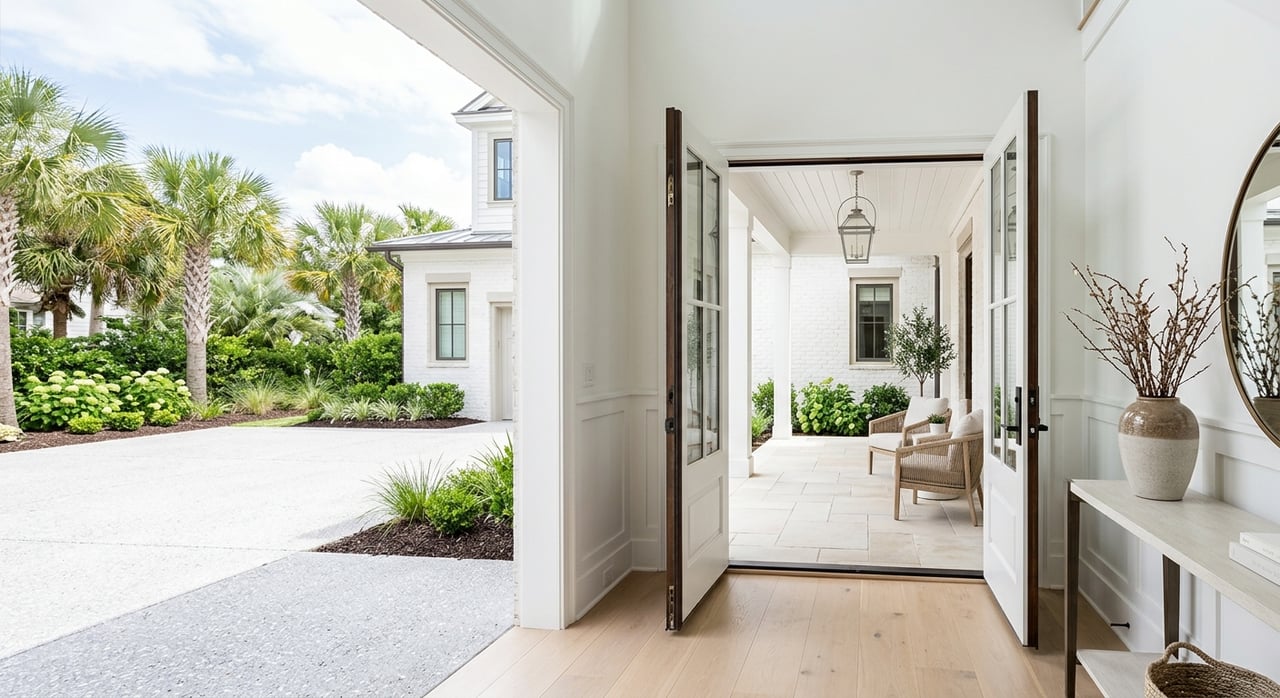
If you are buying a rental in Pace, it helps to know this upfront: investors are usually not chasing flash. They are looking for properties that lease well, hold up over time, and make sense in a commuter-oriented market. If you want to understand what stands out in ZIP code 32571, this guide will walk you through the features, location traits, and due diligence points that often matter most. Let’s dive in.
Why Pace attracts investor attention
Pace is a census-designated place in Santa Rosa County with a 2020 population of 24,684, up from 20,039 in 2010. The area also shows an 83.0% owner-occupied housing rate, a median owner-occupied home value of $293,800, a median gross rent of $1,282, and a median household income of $80,701. Together, those figures suggest a suburban housing market where rentals can work well when the property fits local demand.
The local household profile also matters. In Pace, 25.3% of residents are under 18, and the average household size is 2.81 people. For investors, that tends to support interest in practical single-family rentals with enough space for everyday living.
Functional layouts matter most
Three- and four-bedroom homes stand out
In a market with a large owner-occupied share, investors often look for homes that feel familiar to long-term renters and easy to compare against nearby sales. That usually means practical three-bedroom and four-bedroom homes get the most attention. The appeal is simple: they often fit the way many households in Pace need to live.
A good layout is not just about size. Investors typically want a clear relationship between bedrooms and bathrooms, smooth room-to-room flow, and storage that makes daily life easier. These features can help a property lease faster and reduce the risk of turnover caused by poor livability.
Simple floor plans reduce friction
From an appraisal standpoint, condition, finishes, amenities, and comparable data all matter. Fannie Mae also notes that unusual layouts can create functional depreciation. In plain terms, a home with an awkward design may be less attractive even if it has cosmetic upgrades.
That is why many investors prefer straightforward plans over overly customized homes. A clean, marketable layout often supports rentability better than trendy features that may not add lasting value.
Parking is a big deal in Pace
Car-dependent living shapes demand
Pace is not a transit-rich market. Santa Rosa County says the fixed-route public transportation pilot along Highway 90 ended in 2012, and current ECAT fixed-route service is centered in Pensacola and Escambia County. The county also lists a Pace park-and-ride lot at US 90 and C197-A, which reinforces the area’s commuter pattern.
For investors, that means parking is more than a convenience. It is often a core part of rentability. Homes with adequate off-street parking, usable driveways, and easy vehicle access tend to match how residents move around the area.
Ingress and egress count
Easy access in and out of a property can matter as much as bedroom count. In a car-dependent area, renters may notice tight driveways, awkward backing patterns, or difficult turn movements right away. Properties with simple access and less parking friction often have a practical advantage.
This is especially relevant in parts of Pace where road access shapes daily routines. If a home is easy to reach and easy to leave during the morning commute, that can support its appeal.
Road access often beats walkability
US 90 and I-10 access matter
Santa Rosa County’s comprehensive plan says the county road network is dominated by the US 98 and US 90 corridors, with I-10, US 90, and SR 281 identified among the county’s critical transportation facilities. The plan also describes the population center between Pace and Milton on the US 90 corridor as one of the county’s main growth areas.
That gives investors an important clue. In Pace, location value is often tied to road-corridor access more than classic walkability. Homes with convenient connections to US 90, I-10, Avalon Boulevard, or Chumuckla Highway may better fit the way many renters travel.
Commuter convenience supports rentability
The mean travel time to work in Pace is 28.8 minutes. That does not tell you where every renter works, but it does reinforce the importance of commuting patterns in the local market. Investors often pay attention to whether a property fits that everyday reality.
In practical terms, a well-located rental in Pace is often one that supports routine driving, errands, and regional access. That tends to matter more than being near dense retail or transit stops.
Low-maintenance condition helps cash flow
Durable homes usually win
Even a strong rental can underperform if repair costs pile up. Investors often place a premium on homes with durable finishes, sound exterior condition, and fewer near-term maintenance issues. In a market like Pace, that can matter more than high-end upgrades.
Low-maintenance properties may help reduce turn costs and protect cash flow. That is one reason investors often look closely at roof condition, exterior wear, drainage performance, and overall upkeep before making an offer.
Cosmetic updates are not everything
Luxury finishes may photograph well, but they do not always drive the strongest investor interest. In many cases, a clean, solid home with practical materials is more attractive than a heavily styled property with hidden repair needs. Investors are usually trying to balance rent potential with predictable operating costs.
That mindset fits Pace well. Here, the basics often carry more weight than flash.
Rent benchmarks help, but they are not the whole story
HUD numbers provide a starting point
HUD’s FY 2026 Small Area Fair Market Rent schedule for ZIP code 32571 lists these gross rent benchmarks:
- $1,100 for a 0-bedroom unit
- $1,230 for a 1-bedroom unit
- $1,450 for a 2-bedroom unit
- $1,940 for a 3-bedroom unit
- $2,380 for a 4-bedroom unit
These numbers are useful as a benchmark, not a property-specific asking rent. HUD states that Fair Market Rents are primarily used for Housing Choice Voucher payment standards and related programs.
Verified local data matters more
For actual underwriting, investors usually need more than a broad rent estimate. Fannie Mae says appraisal analysis should rely on comparable sales, contract sales, listings, and verified rental data from reliable sources. In other words, a credible rental analysis should be built from real local evidence.
That is especially important in Pace because the market is heavily owner-occupied. With fewer rental comps available in some pockets, investors may need to study MLS data, deed records, tax records, and verified listings carefully rather than rely on a generic rule of thumb.
Sales comps may carry more weight here
Owner-occupancy changes the valuation approach
Because Pace has an 83.0% owner-occupied housing rate, rental data may not always be deep enough to support a strong income-based valuation by itself. Fannie Mae specifically notes that the income approach may not be appropriate in areas made up mostly of owner-occupied properties if adequate rental data does not exist.
For investors, that means sales comparison evidence may carry more weight in Pace than it would in a denser rental market. Rent data still matters, but it may serve as a supplement rather than the primary anchor for value.
Appraisal-backed analysis reduces guesswork
This is where disciplined underwriting becomes important. A buyer who studies both sale comps and verified rent evidence is usually in a better position than someone relying only on broad online estimates. In a market like Pace, that kind of evidence-based approach can help you avoid overpaying for a rental conversion.
Flood, drainage, and permits deserve close review
Flood risk is not just a coastal issue
Santa Rosa County’s floodplain office maintains flood insurance rate maps, elevation certificates, letters of map amendment, flood insurance studies, and a property-level flood risk portal. The county also advises buyers to ask whether a property is in a floodplain, whether it has ever flooded, and what regulations apply before closing.
That due diligence matters even inland. The county notes that flooding and surface drainage problems can occur well away from the coast. For a Pace investor, that makes flood and drainage review a core part of underwriting.
Permit history can affect your timeline and budget
Santa Rosa County staff say residential plan review may require approval and permitting before work begins, including for stormwater drainage. Building inspections, planning and zoning, and floodplain management also coordinate under the Florida Building Code and the county Land Development Code.
If you are planning repairs, updates, or a rental conversion, permit review should not be an afterthought. Investors often want to confirm what work was done, what approvals may be needed, and whether site conditions could affect renovation cost or timing.
What a strong Pace rental often looks like
When you put the pieces together, a strong Pace rental is usually not the fanciest house on the block. It is often the property with a functional layout, enough bedrooms for local demand, solid parking, and easy access to the US 90 and I-10 corridor. Just as important, it has a clean due diligence story on condition, drainage, flood risk, and permitting.
That mix tends to fit how the local market works. In Pace, investors often reward practicality, durability, and evidence-based value more than showy upgrades.
If you are evaluating Pace rental properties, an appraisal-informed review can help you focus on what really drives rentability and long-term value. For local, evidence-based guidance on investment property decisions in Pace and the surrounding Pensacola area, connect with G. Jeffrey White.
FAQs
What do investors look for in Pace rental homes?
- Investors often look for functional three-bedroom or four-bedroom layouts, adequate parking, commuter-friendly road access, and low-maintenance condition.
Why does parking matter for rental properties in Pace?
- Pace is a car-dependent area with limited local fixed-route transit, so off-street parking and easy driveway access can have a real effect on rentability.
How important is US 90 access for Pace rental properties?
- Access to US 90, I-10, and connector roads can matter because Santa Rosa County identifies these corridors as critical transportation facilities and the area reflects commuter-oriented demand.
Are HUD rent figures enough to price a Pace rental property?
- No. HUD fair market rents are a useful benchmark, but investors should also review verified local rental data, comparable sales, listings, and other reliable market evidence.
Why do sales comps matter so much in Pace real estate analysis?
- Pace has a high owner-occupied housing rate, so rental data may be thinner than in a denser renter market, which can make sales comparison evidence especially important.
Should Pace investors check flood and drainage issues before closing?
- Yes. Santa Rosa County advises buyers to review floodplain status, prior flooding, and applicable regulations, and the county notes that drainage and flooding concerns can occur inland as well.