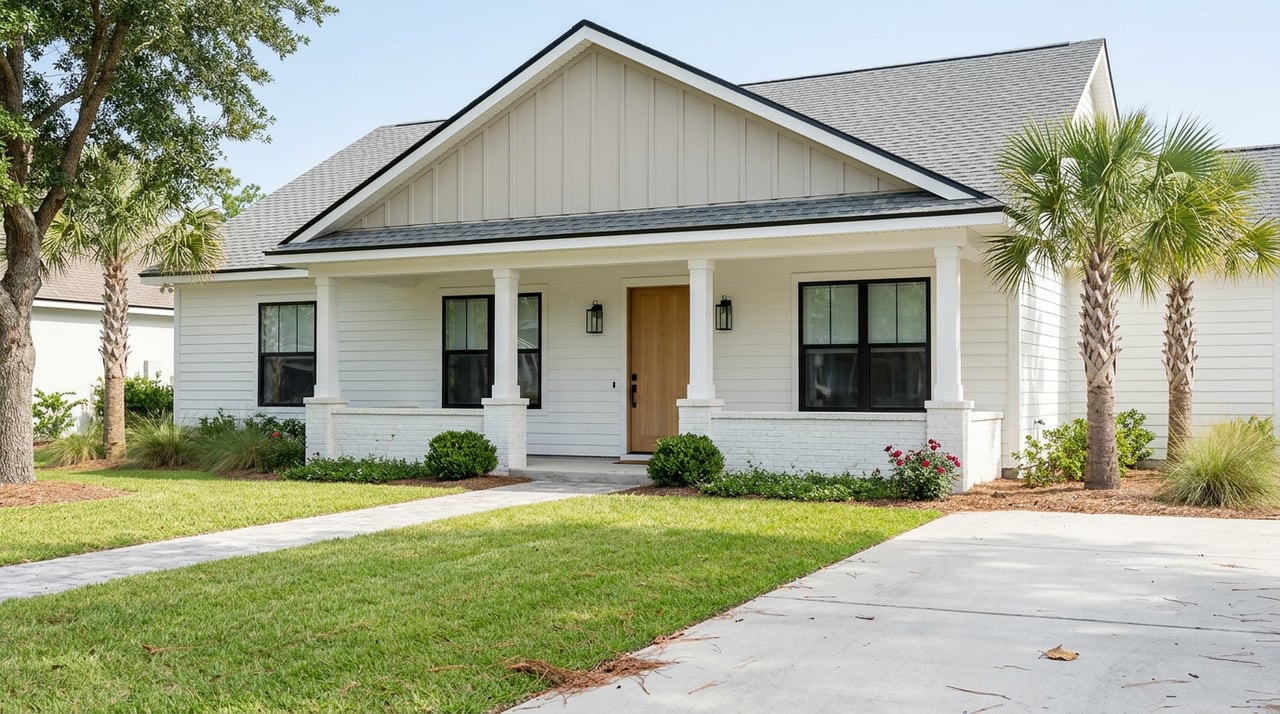
Torn between a shiny new build and a well-kept resale in Pace’s 32571? You’re not alone. Each path offers real advantages, from up-front price and storm resilience to lot size, HOA rules, and timing. In this guide, you’ll see the key trade-offs specific to Pace so you can compare total cost, risk, and lifestyle with confidence. Let’s dive in.
Pace market snapshot: quick context
Recent market aggregators show median home values in 32571 in the low-to-mid $300,000s. Inventory often leans toward sellers, though it varies by neighborhood and product type. Newer subdivisions and golf-course communities tend to command higher prices per square foot than older rural resales nearby. National and regional builders remain active in Pace, with communities like Lennar’s Stonechase illustrating price bands and floor plans for today’s buyers. You can review active Stonechase offerings on Lennar’s community page to get a feel for current pricing and features.
- Explore current new-build offerings at Lennar’s Stonechase community: Stonechase by Lennar
Value: price vs features
New construction often carries a premium because you’re paying for brand-new finishes, current-code construction, builder warranties, and community amenities. In Pace, builder advertising shows single-family plans in the low-to-mid $300,000s at communities like Stonechase, while some townhome product lines have been marketed at lower entry points. Your comparison should focus on finished price, not just the base number. Upgrades, lot premiums, and closing incentives can shift the final tally.
What to compare side by side:
- Price per square foot against similar resales nearby.
- Included features and builder-grade finishes vs recent resale upgrades.
- Lot premiums, elevation, and orientation within the community.
- Any builder incentives that lower your cash to close or monthly payment.
Lot sizes and location trade-offs
Newer Pace subdivisions often optimize for density and amenities, so lots can be smaller, commonly around one-quarter acre. Established neighborhoods, including golf-course areas, may offer larger parcels and a different feel. If you value a bigger yard, mature landscaping, or extra separation between homes, a resale may deliver more land at a similar price point. If you prefer sidewalks, playgrounds, and newer common areas, a new phase may fit your lifestyle better.
Location also shapes daily convenience. Many new phases cluster near growing retail and commuter routes, while older homes may sit a bit farther from new shopping hubs but on larger or more private parcels. Map out commute times, school zones, and errands for each candidate address to see which aligns with your routines.
Build standards and storm resilience
One of the strongest arguments for new construction in Florida is today’s building code. Homes permitted under the 8th Edition Florida Building Code (effective January 1, 2024) meet updated wind, roofing, and energy provisions that can improve performance and may influence insurance decisions. Learn more about current requirements at the 2023 Florida Building Code summary.
Ask each builder about:
- Impact-rated doors and windows where applicable.
- Roof systems and underlayments designed for high-wind events.
- Continuous load paths, connectors, and tiedowns.
- Energy features that go beyond minimum code.
Warranties and your remedies
Florida law provides a baseline one-year builder warranty that addresses certain construction defects tied to code violations. Many builders add “1-2-10” style packages that cover workmanship for one year, systems for two years, and provide structural coverage for up to ten years through a third party. Always request the full written warranty and claims process. Review the state’s statutory backdrop in Florida Statutes, Section 553.
If defects arise, Florida’s Chapter 558 sets a pre-suit notice-and-cure process that typically requires written notice and an opportunity to inspect and repair before filing a claim. It’s a reminder to document issues early and follow the claims steps. You can read the statute text for context: Florida Chapter 558, Construction Defects.
Inspections for new builds and resales
Even with municipal inspections and a builder warranty, you should order independent inspections at key milestones:
- Pre-drywall, when framing and systems are visible.
- Final walk-through before closing.
- An 11-month inspection before the one-year warranty expires.
Independent inspectors focus on workmanship and finish quality, which differ from code-only checks. For an overview of what these inspections cover, see this inspector resource on common inspection FAQs.
For resales, order a full home inspection and consider specialists for the roof, pool, septic, or other major systems as needed.
Timing and financing differences
Resale purchases often close in about 30 to 45 days, assuming standard financing and a clean title. New construction timelines vary. A to-be-built home depends on the builder’s schedule, materials, and weather, while a nearly complete spec home may close sooner.
Financing can differ as well:
- To-be-built homes may require single-close construction-to-permanent loans or two-close structures. These loans can involve interest-only payments during draws and different down payment rules. For an overview of construction loan paths, see this guide on construction-to-permanent financing basics.
- Completed new builds often use standard mortgages. Builders may offer rate buydowns or closing-cost credits with a preferred lender. Incentives change by phase, so confirm current offers directly, for example at Stonechase’s community page.
Operating costs: energy and maintenance
New homes usually feature tighter building envelopes, modern HVAC, and higher-efficiency appliances. Some incorporate ENERGY STAR-level products, which can reduce utility costs compared with older homes built under prior energy codes. Actual savings depend on specific equipment and homeowner habits. For context on efficiency programs, see the EPA’s overview of ENERGY STAR homes benefits.
Resales with recent roof, HVAC, and window upgrades can perform well too. Ask sellers for maintenance records and age of major systems so you can plan for upcoming replacements.
HOAs, amenities, and community rules
Many new Pace subdivisions come with HOAs, amenities like pools or playgrounds, and design standards that keep the neighborhood cohesive. HOAs can add value and predictability, but they also come with monthly or quarterly fees and rules for property changes. Builders often provide HOA summaries at their sales offices and on community pages like Stonechase. When comparing two homes, request the covenants, fee schedules, and recent budgets to understand your full monthly cost and any planned assessments.
Local factors that matter in 32571
- Schools and zoning. Pace is served by Santa Rosa County District Schools. Always verify the attendance zone for a specific address on the district site and review publicly available information there. Visit the Santa Rosa County District Schools website for district-level resources.
- Flood risk and insurance. While much of inland Pace sits outside coastal flood areas, risk varies by parcel. Pull a FEMA Flood Map and, if applicable, request an elevation certificate to estimate flood insurance needs. Start with the FEMA Map Service Center.
- Property taxes and homestead. Use the county’s estimator to model taxes with and without homestead and compare different price points or neighborhoods. You can run scenarios at the Santa Rosa County Tax Estimator. Florida’s homestead exemption reduces taxable value for primary residences; confirm rules and filing deadlines directly with the county.
Quick comparison checklist
Use this list to compare a new build and a resale side by side:
- Pull recent, on-site comps to confirm realistic price and $/sqft for each neighborhood. Newer phases and golf-course areas typically command higher $/sqft.
- Get the builder’s written warranty and confirm what is covered for 1, 2, and 10 years. Review Florida’s baseline warranty framework in Section 553 and the pre-suit process under Chapter 558.
- Request HOA covenants, budgets, fee schedules, and any reserve studies to compare true monthly costs. For reference on community offerings, review builder pages like Stonechase.
- Order independent inspections for a new build at pre-drywall, final, and 11-month milestones. See common inspection stages here: inspection FAQs.
- Check flood zones and obtain a flood-insurance quote for each address if indicated. Use the FEMA Map Service Center.
- Compare financing paths. Discuss construction-to-permanent vs two-close loans and how interest-only draws affect cash flow. Get a primer here: construction loan basics.
- For resales, obtain seller disclosures and a maintenance history including roof, HVAC, plumbing, and any insurance claims.
Which path is right for you?
Choose new construction if you value current-code resilience, lower near-term maintenance, and community amenities, and if your timeline can flex with construction schedules. Look to resale if you want a larger lot, established landscaping, faster closing, and the potential to buy below the new-build premium in the same area.
If you’re weighing two specific addresses in Pace, the best next step is a clear, apples-to-apples analysis. With appraisal-backed pricing expertise and long-standing local knowledge, we can help you compare true total cost, risk, and convenience for each option, then negotiate with confidence.
Ready to run the numbers and tour smart? Schedule a Free Consultation with G. Jeffrey White to make your Pace purchase with clarity.
FAQs
How do new vs resale prices compare in Pace 32571?
- New builds often carry a premium for current-code construction, warranties, and amenities, while resales may offer larger lots or established areas at a lower price per square foot.
What hurricane-resilience advantages do new homes have in Florida?
- Homes permitted under the 2023 Florida Building Code include updated wind, roof, and energy provisions; see the code summary for context.
What inspections should I order for a new construction home in Pace?
- Independent pre-drywall, final, and 11-month inspections help document issues beyond code minimums; see inspection FAQs.
How do HOAs affect my monthly cost and flexibility?
- HOAs add amenities and upkeep but include fees and rules; request covenants and budgets from the builder or seller to see costs and any upcoming assessments.
How long will a new build take compared with buying a resale?
- Resales often close in 30–45 days, while to-be-built homes depend on construction schedules; nearly finished spec homes may close sooner, but timing varies by builder.