Thinking about a new roof in Pace? Between hurricane seasons, rising insurance scrutiny, and real replacement costs, choosing metal or architectural shingles can feel like a high-stakes decision. You want something that looks good, lasts, and helps with premiums. In this guide, you’ll see clear cost ranges, lifespan differences, wind performance, and insurance steps tailored to Santa Rosa County. Let’s dive in.
Pace roofing realities and permits
Pace sits in a high-wind region with hurricanes, tropical storms, and heavy rain. Roof choice here is first about wind resistance and water integrity. Florida enforces the Florida Building Code, so products with Florida Product Approval or Miami‑Dade NOA and code-compliant installation matter for performance and insurance.
Roof replacement in Santa Rosa County typically requires a building permit and inspections. Your contractor should handle the permit and schedule inspections. Keep copies of the permit, inspection sign-off, and warranties for your records.
Lifespan: metal vs. shingles
Architectural asphalt shingles commonly last about 20 to 30 years with proper installation and ventilation. Heat, humidity, UV, and storm exposure can shorten that range.
Quality metal roofs often deliver 40 to 70+ years depending on the metal type, gauge, and coating. Aluminum is a strong choice in coastal-influenced areas because it resists corrosion better than basic galvanized steel.
Wind and storm performance
Wind uplift and installation
Standing seam metal with concealed fasteners and properly designed clips typically offers excellent wind uplift resistance when installed to manufacturer and Florida Building Code requirements. Exposed-fastener panels rely on many screws that can loosen over time if not installed and maintained well.
Architectural shingles can achieve high wind ratings when you follow the right nailing pattern, adhesive setup, and edge detailing. That said, shingles are generally more prone to edge lift and blow-off than well-installed standing seam on complex or steep roofs.
Impact and hail resistance
Metal roofs usually handle impacts well and often remain watertight even if dented. Asphalt shingles vary by product; Class 4 impact‑resistant shingles are available and can improve performance during hail events.
Coastal corrosion considerations
Salt air affects the broader Gulf Coast region, including inland areas like Pace. Aluminum and properly coated or galvalume steel hold up better in these environments. Fasteners, flashing, and trim should be corrosion-resistant and compatible with the roofing metal. Asphalt shingles are not prone to rust, but Florida’s heat and humidity can speed up their aging and encourage algae staining unless you choose algae-resistant products.
Costs in Pace: what to expect
Installed prices vary with roof size, pitch, tear-off needs, underlayment, and complexity like dormers and valleys. These ranges reflect typical 2023–2024 guidance; get local bids for precise numbers.
- Architectural shingles: about 3.50 to 6.00 dollars per square foot. Many average homes land in the lower to middle of that range, with designer shingles costing more.
- Metal roofing: about 6.50 to 14.00 dollars per square foot. Exposed-fastener panels sit at the lower end, metal shingles and stone‑coated steel in the middle, and standing seam at the higher end. Coastal-grade aluminum and heavier gauges increase cost.
If you need a full tear‑off, expect additional labor and disposal costs. Ask for a clear line item in each bid.
Lifecycle cost perspective
Metal often costs 1.5 to 3 times more upfront than shingles. Over time, the longer service life of metal can even out the math if you plan to own the home for 10 to 20 years or more. Metal also tends to need fewer storm-related repairs and less frequent replacement.
Cool colors and reflective coatings on metal can reduce cooling loads in Florida’s climate. Light-colored or premium shingles can help too, though the impact on bills varies by home.
Insurance and inspections in Florida
Insurers look at roof age, material, wind and impact ratings, visible condition, and installation documentation. Metal roofs often score well for durability. High-wind or impact-rated shingles can also improve underwriting. Discount amounts vary by carrier and are not guaranteed.
In Florida, a wind mitigation inspection documents features that reduce wind damage. Submitting a current report can influence premiums. Keep product approvals, permits, final inspection sign-off, photos, and written warranties. These records help with underwriting and future claims.
Before you replace a roof, call your insurer to ask which materials, ratings, or documents unlock credits. After installation, get a wind mitigation inspection and submit everything to your carrier.
Maintenance and energy
Shingles need periodic checks for missing tabs, granule loss, and flashing issues. Good attic ventilation is essential for shingle life. Algae-resistant products help reduce streaking in humid conditions.
Metal roofs should be inspected for seal integrity at flashings and penetrations, fastener condition on exposed‑fastener systems, and coating health. Standing seam systems typically need less fastener maintenance because fasteners are concealed.
Reflective metal coatings and cool colors can lower cooling loads in the long Florida summer. Proper insulation and ventilation matter regardless of material.
Curb appeal and resale
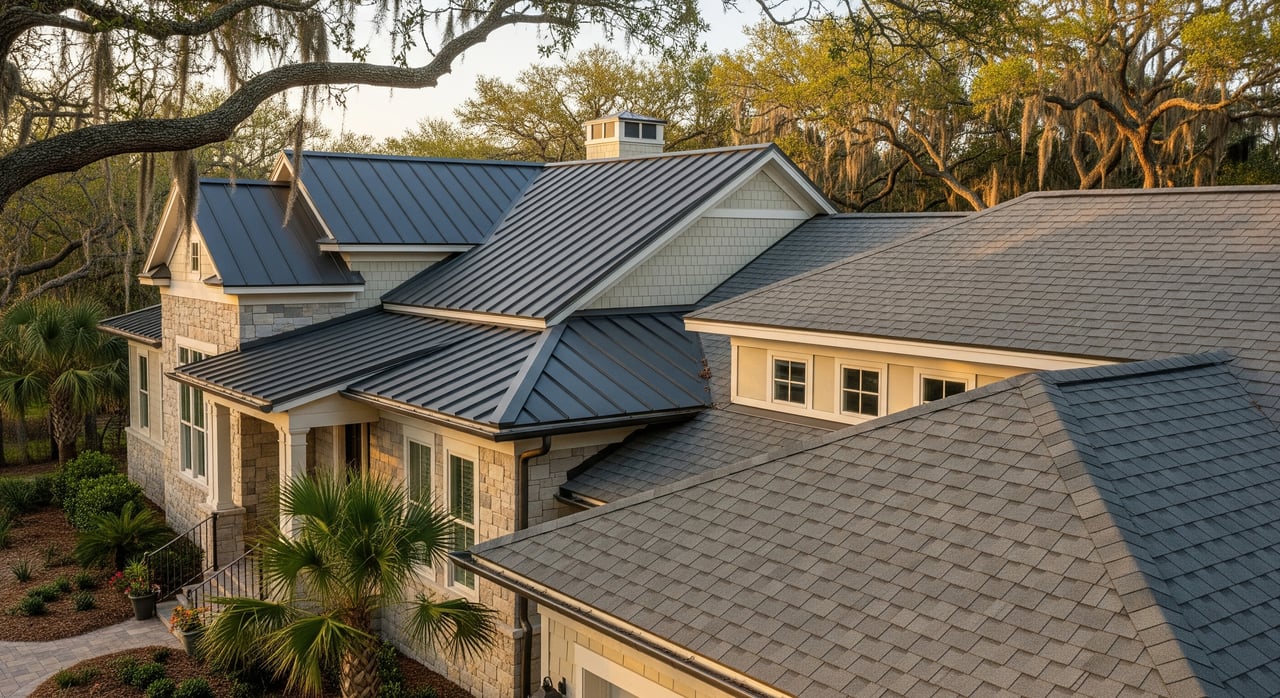
Architectural shingles provide a traditional look that fits many Pace neighborhoods. Metal can create a modern profile or mimic traditional materials with metal shingles. Homeowner association rules may restrict materials or colors, so check covenants before you choose.
A well-documented roof with Florida approvals, permits, warranties, and a wind mitigation report can strengthen buyer confidence and support value at resale.
How to choose for your Pace home
Think about your time horizon, budget, storm risk, neighborhood context, insurer treatment, and roof complexity.
- Long ownership: metal’s longer life and strong wind performance often justify the upfront cost.
- Short ownership: architectural shingles keep costs tight while improving curb appeal for near-term resale.
- High storm tolerance: standing seam metal usually holds an edge when installed to code with proper details.
- Complex roof geometry: shingles may be more cost-effective on roofs with many valleys and penetrations.
Homeowner checklist for contracting
- Get three or more written bids from licensed Florida roofers with recent Santa Rosa County projects.
- Confirm your contractor will pull the county permit and schedule inspections.
- Request product approvals and written installation instructions that will be followed.
- Ask for references and photo examples of local installs.
- Contact your insurer to confirm potential discounts and post-install wind mitigation requirements.
- Secure manufacturer and workmanship warranties in writing.
- Photograph the roof before, during, and after installation. Keep the permit, final inspection card, approvals, warranties, and contractor contact details.
Quick scenarios
- Selling within 5 years: architectural shingles often make financial sense and meet buyer expectations in many neighborhoods.
- Staying 10 to 20+ years: a well-installed metal roof can pay off through longer service life and potential insurance benefits.
Final thoughts
In Pace, you face real wind and rain exposure, evolving insurance requirements, and meaningful cost tradeoffs. If you plan to sell soon or want an appraisal‑informed view of ROI, you can align your roof choice with your timing and budget. If you are staying long term, investing in wind performance and documentation can reduce risk and support value.
If you want perspective on how a new roof might influence your home’s market position or resale, reach out to G. Jeff White for appraisal‑backed guidance. Schedule a Free Consultation.
FAQs
How long do metal and shingle roofs last in Pace?
- Architectural shingles often last 20 to 30 years, while quality metal can run 40 to 70+ years depending on material, coating, and installation.
What do new roofs typically cost in Santa Rosa County?
- Architectural shingles are about 3.50 to 6.00 dollars per square foot installed; metal ranges roughly 6.50 to 14.00 dollars per square foot based on profile and material.
Do insurers in Florida prefer metal roofs?
- Many carriers view metal as durable and may offer discounts, though amounts vary; high-wind or impact-rated shingles can also improve underwriting.
Do I need a permit for a roof replacement in Pace?
- Yes. Santa Rosa County generally requires a building permit and inspections for roof replacement; your contractor should handle this and provide documentation.
Will a metal roof corrode inland in Pace?
- Salt air can travel inland, so aluminum or properly coated steel with compatible fasteners and flashing is recommended to manage corrosion risk.
What is a wind mitigation inspection and why get one?
- It documents features that reduce wind damage, and submitting it to your insurer can influence premiums and underwriting decisions.